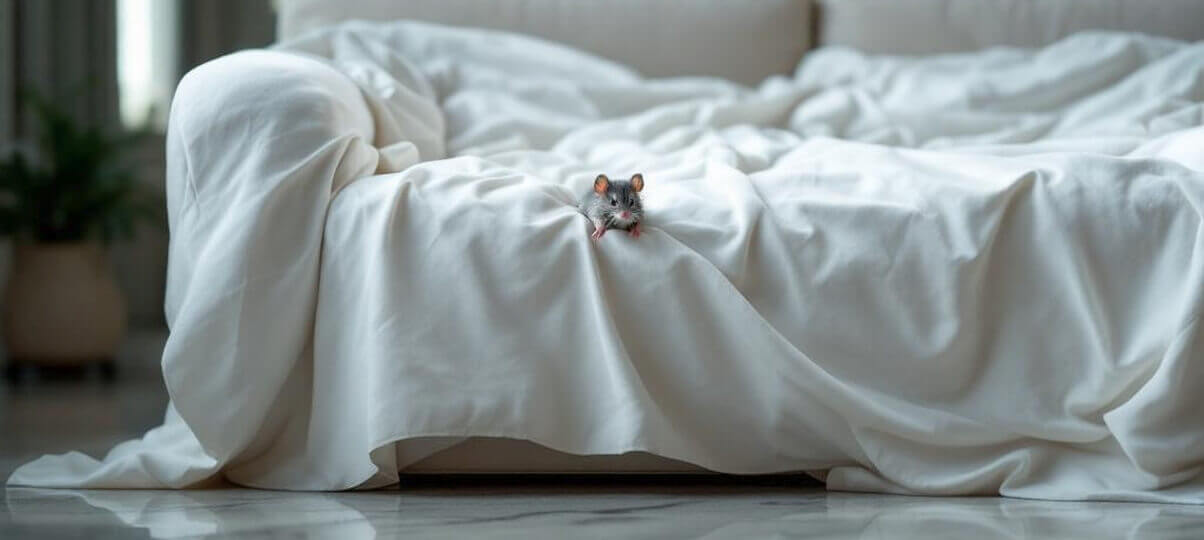
Image generated by artificial intelligence
Hantavirus is not a new virus and not a “household infection from furniture.” It is a group of viruses that are naturally associated with rodents: mice, rats, voles, and other small animals. A person does not become infected from the sofa, wardrobe, or bed itself, but through contact with places where rodents have been and have left urine, droppings, saliva, or nesting material.
That is why hantavirus is directly connected to the home, furniture, and cleaning rules. The greatest risk does not arise when furniture is simply standing in a room. It arises when dust accumulates for a long time in a closed space, food, cardboard boxes, fabrics, and old items are stored there, and traces of mice appear behind wardrobes or under sofas.
What Is Hantavirus?
Hantavirus is a zoonotic infection, meaning it is transmitted from animals to humans. The main natural carriers are rodents. They may look healthy but still shed the virus through urine, droppings, and saliva.
In different regions of the world, hantaviruses can cause different forms of disease. In Europe and Asia, hemorrhagic fever with renal syndrome is described more often, while in the Americas, hantavirus pulmonary or cardiopulmonary syndrome is more common. The WHO notes that the disease can vary in severity depending on the type of virus and the region.
For an ordinary person, the key point is not to memorize all the medical names, but to understand the practical risk chain: rodents — their excretions — dust — inhalation or contact with contaminated surfaces.
How Hantavirus Spreads
Hantavirus most often spreads through contact with a contaminated environment. A person can become infected by inhaling dust that contains particles of urine, droppings, or saliva from infected rodents. Infection is also possible through contaminated objects, food, water, broken skin, or a rodent bite.
That is why the following situations may be dangerous:
- cleaning a country house after winter;
- clearing out old wardrobes, storage rooms, basements, or garages;
- dry sweeping floors after mice have appeared;
- vacuuming mouse droppings;
- storing grains, pet food, or biscuits in open packages;
- cleaning behind a sofa, kitchen unit, or wardrobe without gloves;
- contact with cardboard boxes where rodents may have lived.
Person-to-person transmission is not typical for most hantaviruses.
Hantavirus Symptoms
Hantavirus symptoms may not appear immediately. The WHO notes that they usually begin between one and eight weeks after exposure, depending on the type of virus. Typical early signs include fever, headache, muscle pain, weakness, abdominal pain, nausea, or vomiting.
Possible hantavirus symptoms include:
- high temperature;
- chills;
- severe weakness;
- muscle pain;
- headache;
- nausea;
- vomiting;
- abdominal pain;
- cough;
- shortness of breath;
- a feeling of pressure in the chest;
- signs of kidney dysfunction in some forms of the disease.
With the pulmonary form, the disease can quickly progress to coughing, shortness of breath, fluid accumulation in the lungs, and shock. With forms involving renal syndrome, blood pressure problems, bleeding, and kidney failure may occur.
When to See a Doctor
If fever, severe weakness, muscle pain, cough, or shortness of breath appear after cleaning a country house, basement, garage, shed, old furniture, or places with signs of rodents, you should seek medical attention.
Hantavirus Prevention at Home
Hantavirus prevention is not about panic or sterility. It is about controlling rodents, dust, food, and storage areas.
Basic rules:
- Seal gaps near pipes, baseboards, ventilation, under kitchen units, and behind wardrobes.
- Store food in airtight containers.
- Do not leave pet food open.
- Regularly clean crumbs from kitchen drawers.
- Check the space behind furniture.
- Do not accumulate cardboard in wardrobes, storage rooms, or under the bed.
- Use wet cleaning instead of dry sweeping in risk areas.
- Do not vacuum mouse droppings.
- Disinfect hard surfaces after signs of rodents.
- For upholstered furniture, use professional cleaning or steam treatment.
Why Hantavirus Is Connected to Furniture
Furniture is not an independent source of hantavirus. However, furniture can create conditions that attract rodents or make safe cleaning more difficult.
The most problematic areas are:
- lower drawers;
- sofas and armchairs in country houses;
- the space under the bed;
- furniture in garages, basements, and sheds;
- cardboard boxes inside wardrobes.
Rodents look for food, warmth, and nesting places. If furniture contains crumbs, open food, paper, fabric, bags, cardboard, or rarely cleaned corners, the risk of mice appearing increases.
Hantavirus and Furniture Care: The Main Rule
The main rule is simple: if there are signs of rodents, do not begin with dry cleaning.
Do not immediately:
- sweep with a broom;
- vacuum;
- shake out fabric;
- beat cushions;
- wipe droppings with a dry cloth;
- carry boxes around the room;
- touch contamination with bare hands.
Sweeping or vacuuming rodent urine, droppings, or nesting materials can lift tiny virus-containing particles into the air. The safe method is first disinfection, then removal of contamination.
How to Safely Clean Furniture After Mice or Rats
If you see mouse droppings behind a sofa, under a bed, or near other furniture, act step by step.
1. Ventilate the Room
Open the windows and doors. If it is a country house, basement, shed, or room that has been closed for a long time, it is better to let the air refresh before cleaning.
2. Wear Gloves
For household cleaning, use rubber or plastic gloves. If contamination is significant, it is better not to do this work yourself without additional protection.
3. Wet the Contamination With Disinfectant
Rodent traces should not be swept away. They should first be thoroughly wetted with a disinfectant. The CDC recommends using a household disinfectant or bleach solution and allowing it to work for about five minutes or according to the label instructions.
For furniture, one correction is important: aggressive products can damage wood, veneer, varnish, paint, fittings, or fabric. On visible surfaces, test the product on an inconspicuous area first. If the furniture is expensive, antique, or has a delicate finish, professional sanitary cleaning is safer.
4. Remove Contamination With Disposable Materials
After disinfection, remove the contamination with paper towels or disposable cloths. Used materials should be immediately discarded in a sealed bag or container.
5. Treat the Surface Again
After removing droppings or nesting materials, hard furniture surfaces should be wiped again with disinfectant. The CDC specifically mentions hard surfaces, including cabinets, countertops, and drawers, as areas that should be cleaned and disinfected after rodent traces.
Upholstered Furniture: Sofas, Armchairs, Ottomans
Upholstered furniture is more difficult because fabric and filling can retain dust and odors. If there is a suspicion that a sofa or armchair has come into contact with rodent traces, simply vacuuming the upholstery is not enough.
The CDC recommends shampooing carpets and upholstered furniture with a commercial disinfectant or using professional steam cleaning.
If upholstered furniture has been in a neglected room, has a strong odor, nesting traces, or visible contamination, it is practical to assess not only cleaning but also disposal. Fabric and filling cannot always be reliably treated.
Mattresses, Pillows, Blankets, Covers
Removable covers and textiles should be washed separately. The CDC recommends washing potentially contaminated textiles in hot water with detergent and drying them at a high temperature or in the sun.
From a furniture-care perspective, this means that furniture with removable covers is easier to maintain in a sanitary condition. For country houses, rental homes, children’s rooms, and spaces with a risk of rodents, this is a practical advantage.
Should You Be Afraid of Hantavirus?
Hantavirus should not be seen as a mass household threat in every apartment. But it should not be ignored in places where rodents or their traces are present. The most important steps are simple: block rodent access, remove food sources, avoid raising dust, disinfect surfaces correctly, and pay attention to symptoms after risky exposure.
Furniture in this topic is not a source of fear, but part of the home sanitation system. Wardrobes, sofas, kitchen units, chests of drawers, and shelving should not be wiped only for appearance. They should be maintained so that the home does not contain hidden places where dust, crumbs, cardboard, and rodent traces can quietly accumulate.
FAQ: Short Answers About Hantavirus
Is hantavirus transmitted through furniture?
No. Furniture itself does not transmit hantavirus. The risk arises if the furniture or the space around it is contaminated with urine, droppings, saliva, or nesting materials from infected rodents.
Can you vacuum after mice?
No. If there are mouse droppings or other rodent traces, disinfection is needed first. Vacuuming or dry sweeping can lift dangerous particles into the air.
What should you use to treat a wardrobe after mice?
Hard surfaces should be treated with a household disinfectant or another suitable product according to the instructions. Before applying it to a varnished, wooden, or painted surface, test the product on an inconspicuous area.
What should you do with a sofa if mice were there?
Upholstered furniture should not simply be vacuumed. It requires professional cleaning, steam treatment, or shampooing with an appropriate product. If contamination is severe, disposal may be safer.
-cr-114x90.jpg)
-cr-114x90.jpg)


-cr-114x90.jpg)